
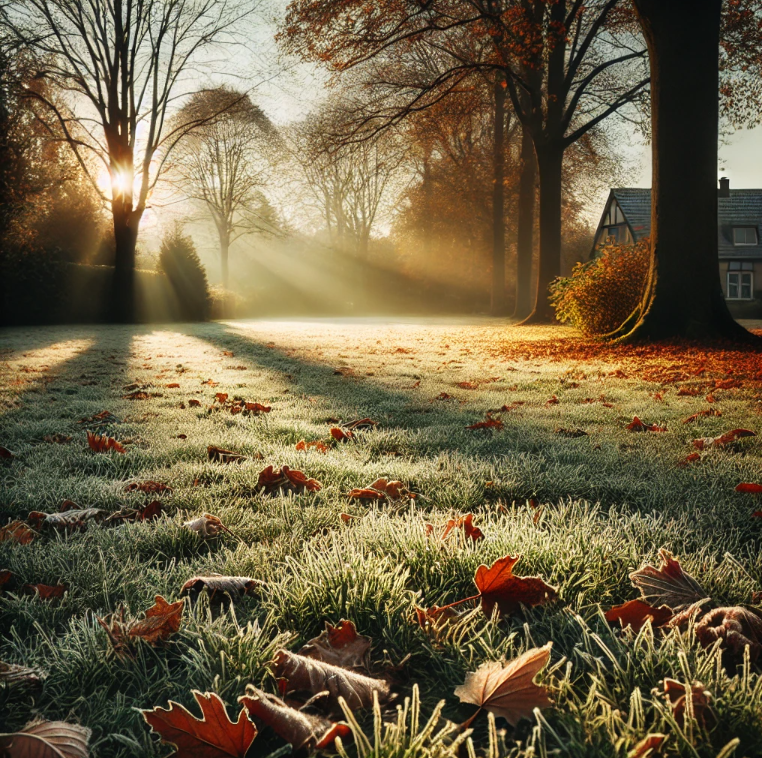
The “first frost” refers to the first time in the fall when temperatures drop to 32°F (0°C) or below, causing frost to form on the ground. In the Mid-West, this typically happens between mid-October and early November.
In relation to lawn care, the first frost signals important seasonal changes:
End of the Growing Season:
Cool-season grasses (like fescue and bluegrass) start to go dormant as temperatures drop, meaning they stop growing. For warm-season grasses (like Bermuda or zoysia), the first frost may trigger dormancy as well.
Final Mowing:
After the first frost, lawns need less frequent mowing. For cool-season grasses, it’s a good time to lower the cutting height for the last mow, which helps reduce winter disease risk. Warm-season grasses may not need further mowing after frost.
Fertilization:
For cool-season lawns, applying a fall or winter fertilizer before or around the first frost helps strengthen the root system for the winter and encourages a healthier lawn in the spring.
Watering:
After the first frost, lawns generally require less water. Kansas City typically receives enough fall moisture, but it’s important to ensure the lawn stays hydrated if there’s a dry spell before winter.
Overseeding:
The weeks leading up to the first frost are ideal for overseeding cool-season grasses, ensuring new growth establishes before the cold sets in.
Aeration:
Aerating before the first frost can help relieve soil compaction and improve nutrient absorption, setting up the lawn for healthier growth in the next season.
In Conclusion:
The first frost often marks the final stages of lawn care preparation before winter dormancy sets in.